Interest Literacy
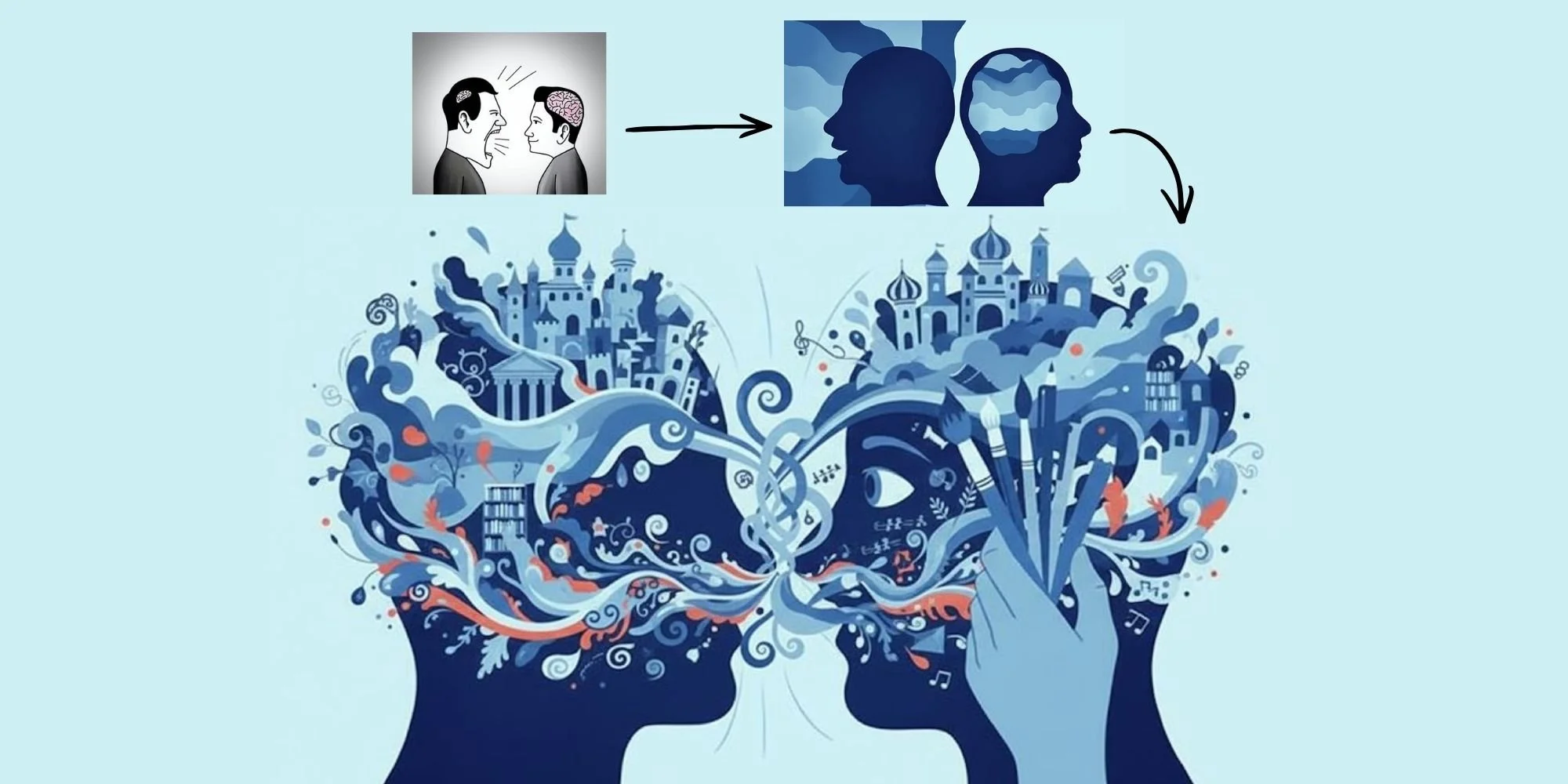
In this exploration of creative philosophy, the author argues that interest is the true engine of creativity. By moving beyond the false belief of "those in STEM" versus "the art kids," we find that a deep investigation into anyone’s curiosities creates a unique perspective—therefore a "creation" in its own right. It’s not one person over the other, it’s problem solving across subjects which all require creative of solutions. The text challenges the traditional career model of working for a paycheck, suggesting instead that we should choose roles based on working for who we are becoming. By fostering "Symbiotic Creativity"—the collaboration between those with deep knowledge (STEM type) and those with the skill to express it (artists)—we can solve old problems with new, inspired solutions.
Interest is creativity. I will go further: the deliberate effort of collecting and learning about a topic—interest—leads directly to the creation of a perspective. Everyone is entitled to a perspective, and I consider that to be the very thing many people claim they don't have: creativity. Paint is a correlation of creativity, not a symbol.
It might seem ill-positioned for an artist to tell others that they are creative too. One might say, "Not all of us can paint for a living." To that, I would respond in agreement that very few of us were taught how to do so efficiently—myself included.
My "creativity" appeared from an investigation of an artist who seemingly didn't have much of it: me.
A professor once commented (pridefully, I reflect), "Your work is skillful, but not very creative."
Thank God.
I didn’t feel creatively expressed, I felt like a mathematician figuring out the perfect drawing method. I was someone who simply drew whatever seemed difficult in an attempt to get better. You can look back in the archives, my work feels random and soulless (self-admitted). Whatever others saw in it it was a projection of their own feelings. I didn’t care who was in my portraits or how they evoked certain emotions; I only cared if my little brother could tell who or what I was drawing. I knew he wouldn’t lie and say it looked good just to be nice. He’d tell me exactly what was wrong with the nose, and I’d get to fixing it.
At the time, I wasn’t interested in anything other than skill. I wanted to be a human printer, capable of replicating anything with a pencil and paper. It wasn’t until I started religiously listening to the Creative Pep Talk podcast that things changed. The host, Andy J. Pizza, told me to "know my inspirations." He asked if I could name my top ten favorite artists. I tried, but I only really knew Norman Rockwell and Jim Kay (my absolute favorite illustrator, whom I’ll get into later).
Once I started intentionally deciding what my interests were, my world built up incredibly fast.
A few of my interests, just so you know:
Anything Russian: Onion domes, folklore, and history.
Architecture: Castles, ornamental buildings, classical styles, mansions, and CONSERVATORIES.
Atmospheres: Coffee shops with plants, Scottish and Irish landscapes.
Art & Academics: Large cat art, making anything into a series, creative portraits.
Intellectual Pursuits: Philosophies, Jungian studies, hating on Freud, languages, and traditional cultures.
The Dynamics of Knowledge
Click the image to read this description of two types of curators when they’re put against eachother.
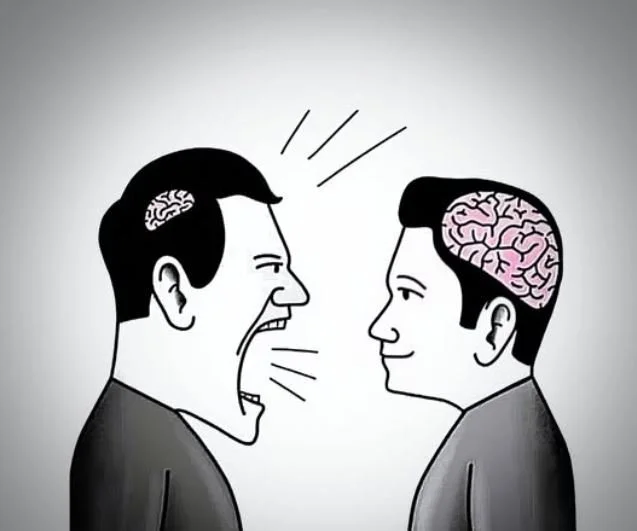
I often think of a specific comic: it shows someone with little knowledge yelling over a quieter, wiser person. I found this image titled :
““When ignorance screams, intelligence is silent. Your peace and quietness are worth more." followed by … DON'T ARGUE WITH DONKEYS. Yikes.
While this reflects my unease with politically radical rants over quieter educated solutions, it also reflects my theory on the two types of people in the creative world being othered rather than collaborated.

This is a better representation of what we’re experiencing. The extrovert and introvert in theory disconnected and living with an empty world of the two.
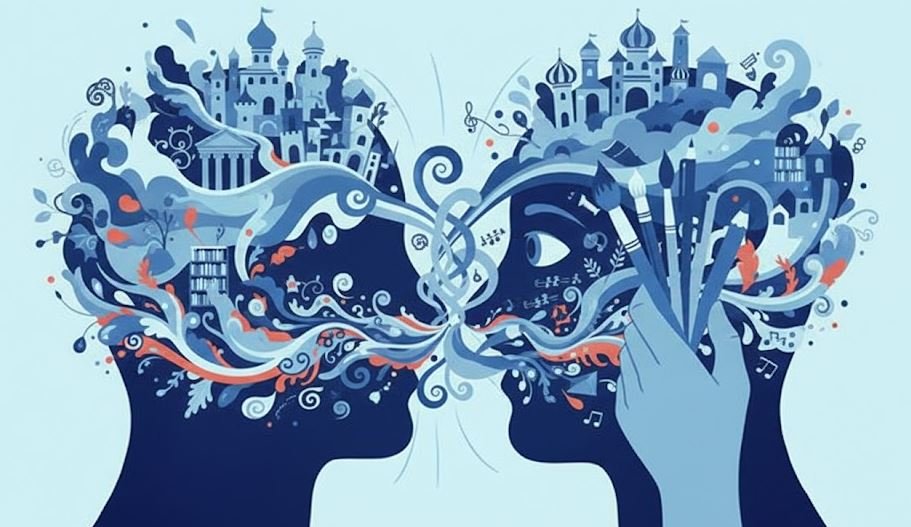
Collaboration is more expansive than anything done by yourself.
If the person with “little knowledge” stopped yelling and instead used their comfort in communication to show interest in the other individual initiating in the domain they already thrive in, communication, they would gain a perspective on insights they weren't previously privy to. If the quieter one listens to the interested extrovert they can start creating pathways of similarities and begin interdependent ventures.
Do I think artists are dumb? No, but hungry for sustaining knowledge…? Do I think artists are pushed toward expressive rather than academic pursuits because of a "dumb artist" stigma? Yes, Bingo. Why not teach an artist how to do some accounting and taxes? Because there is a stigma they won’t or shouldn’t or can’t.
The opportunities I flourish in come from refusing to let my emotions or my skills be the most interesting thing I have to say. My professional relationships with thought leaders and pioneers I admire that have caught my interest—people who have brilliant ideas but no way to share them—are bigger than me. That interests me deeply and enough for a lifetime. I hope that one day, that same college professor could look at my work now and say, "You must have someone in your ear, because this isn't just skilled—it communicates a world bigger than your own emotions." Every artist deserves what it feels like to co-create. A gallery for me personally is a world not fit for the things I wish to build.
The Path of the Illustrator
Beyond authors, there are millions of thought leaders looking for a match. Instead of the comic featuring "little knowledge/big mouths" versus "big knowledge/little will to speak," I suggest an alternative: Someone with Big Eyes and Books paired with someone with Big Hands and Art Supplies. Success in this direction requires two things: FOCUS in understanding one’s materials and COMMUNICATION in sharing those materials to create new solutions to old problems.
What Are You Becoming?
I’ve found a job every time through the conviction of my interests. It is mandatory for me to get the most out of any job I grant my time to. I call it SPEAR FISHING, and I’ll write about that another time. I want to get something from a job more than a paycheck; I want to become something more than just wealthier.
Jim Rohn once said: “Don’t ask, ‘What am I getting paid here?’ Ask instead, ‘What am I becoming here?’”
What a game-changer. As soon as I notice I am becoming a person I don’t aspire to be at a job, I leave. I will quit based on a quote—don’t test me. Not everyone feels they can do that, but I would push back and say: it starts with standards. It starts with a perspective of what you believe you deserve. You don't allow yourself to have more than you believe you are worthy of.
If you believe you can become someone who can lead the people you are currently a part of, stay at that job. But if the energy of your coworkers lowers your vibration by the day, and you are reaching for "Friday EOD" every week, run for the hills. I refuse to believe in the "un-malleability" of the human spirit or the skills we acquire, lose, and find again.
A New Baseline
In all this talk about interest, I want to answer one question: How do we promote a more interested and creative baseline for all students?
We stop cutting artists off from non-artists (I’m looking at you, animation degrees). We stop "othering" creatives from non-creatives in general. STOP THAT. We must value everyone’s ability to curate and grow in a skill or a field of knowledge. We must respect the ability to create a unique perspective, no matter who you are or where you come from. We must create from the dream of building inspiring places so that future generations are inspired to join them.
Comment your list of top-of-mind interests below.
Write a list of what you feel either want to become literate in depending on what side of the archetype you are.